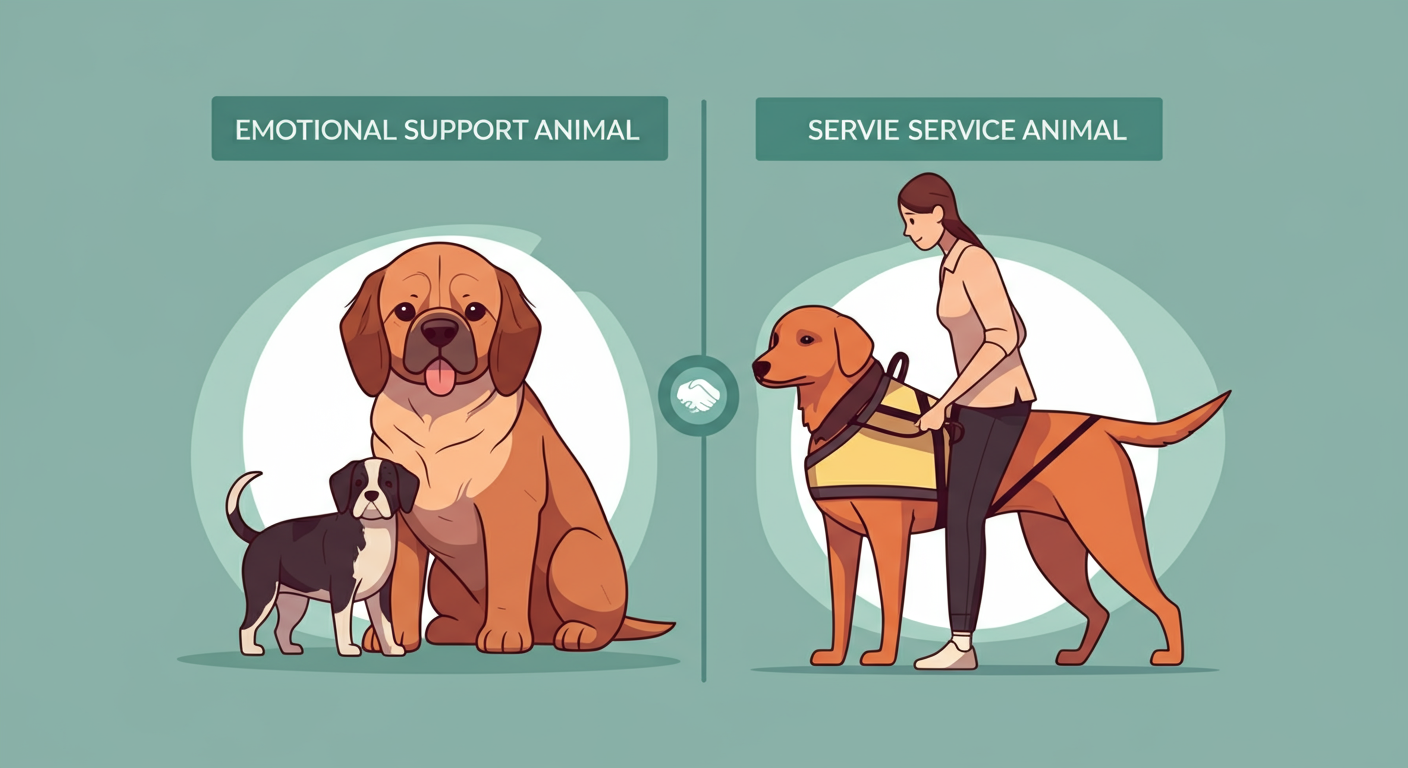
Understanding the Difference: Emotional Support Animals vs. Service Animals
The world of assistance animals can be complex, often leading to confusion between Emotional Support Animals (ESAs) and Service Animals. While both provide invaluable support to their human companions, their legal protections, training requirements, and roles differ significantly. At Clinical Support Animals (CSA), we believe in empowering individuals with accurate information to navigate these distinctions with confidence.
What is a Service Animal?
A Service Animal is specifically trained to perform tasks directly related to a person's disability. Under the Americans with Disabilities Act (ADA), a service animal is defined as a dog (or in some cases, a miniature horse) that has been individually trained to do work or perform tasks for an individual with a disability. The tasks performed must be directly related to the person's disability.
Examples of tasks a service animal might perform include:
- Guiding people who are blind or have low vision.
- Alerting people who are deaf or hard of hearing to specific sounds.
- Pulling a wheelchair.
- Alerting and protecting a person who is having a seizure.
- Reminding a person with mental illness to take prescribed medications.
- Calming a person with Post Traumatic Stress Disorder (PTSD) during an anxiety attack.
- Detecting the onset of a medical crisis, such as a diabetic low blood sugar event.
Service animals are generally allowed in all public places where the public is allowed to go, including restaurants, stores, and public transportation, under federal law.
What is an Emotional Support Animal (ESA)?
An Emotional Support Animal (ESA) provides comfort and emotional support to individuals with a mental or emotional disability. Unlike service animals, ESAs are not required to undergo specific training to perform tasks. Their primary role is to provide companionship and alleviate symptoms of a person's disability through their presence.
While ESAs offer immense therapeutic benefits, they do not have the same broad public access rights as service animals under the ADA. However, they do have specific protections under the Fair Housing Act (FHA), which allows them to live with their owners in housing that typically has a "no pets" policy, provided the owner has a legitimate need and a letter from a licensed mental health professional.
Key Differences Summarized:
| Feature | Service Animal | Emotional Support Animal (ESA) |
|---|---|---|
| Definition | Individually trained to perform tasks for a person with a disability. | Provides emotional support and comfort to a person with a mental or emotional disability. |
| Training | Extensive, specific task-oriented training required. | No specific training required. |
| Legal Protection (Federal) | Americans with Disabilities Act (ADA) - Public Access. | Fair Housing Act (FHA) - Housing. |
| Public Access | Generally allowed in all public places. | Limited public access; generally not allowed in all public places unless specific state laws apply or business policies permit. |
| Species | Primarily dogs; miniature horses in some cases. | Can be various species (dogs, cats, birds, etc.). |
Why is this distinction important?
Understanding the legal distinctions is crucial for both individuals with disabilities and public entities. Misrepresenting an ESA as a service animal can lead to misunderstandings and potentially undermine the legitimate rights of individuals who rely on trained service animals.
At CSA, we are committed to helping individuals understand their rights and responsibilities regarding assistance animals. If you believe an Emotional Support Animal could benefit your well-being, our team can guide you through the process of obtaining proper documentation from a licensed mental health professional.
For more information on how Clinical Support Animals can assist you, please explore our resources or contact us directly.